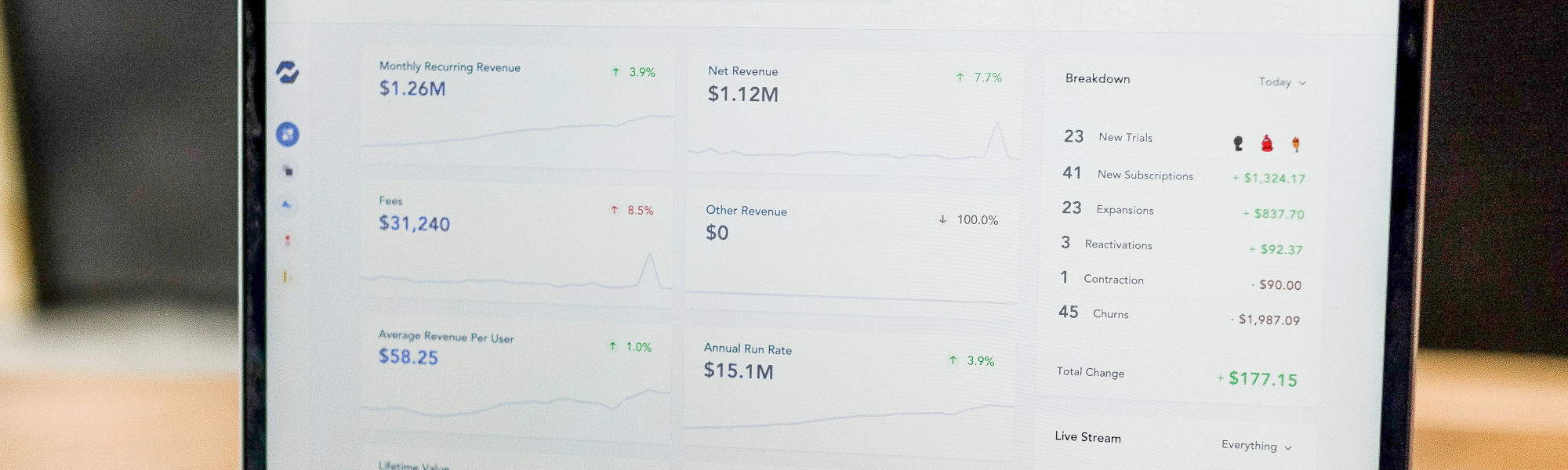

For many CPG founders, scaling involves scanning the ROAS column and making snap judgments on business health based on a single dashboard number. This is a tactical trap that won’t help you scale your D2C ad spend profitably.
At the $1m revenue mark, it’s easy to mistake a green dashboard for success. But for a scaling brand, platform-reported ROAS is often a ghost metric. And one that masks declining contribution margins and the true cost of acquiring a new customer.
The danger of this ROAS Mirage is that it rewards safe spending on low-hanging fruit while your actual bank balance remains stagnant.
To scale your D2C ad spend profitably, you must undergo a fundamental identity shift from a trigger-happy media buyer to a full-funnel marketing strategist. Your goal should be to build a predictable, systemic engine where every dollar spent increases the Enterprise Value.
By building a system rather than chasing hacks, you aren’t just selling products, you are building a resilient, professionally run asset ready for a multi-million exit.
Is Your Infrastructure Gas-Ready?
Before you can ramp up your daily budget, you must audit your operational reality. In the CPG world, scaling your D2C ad spend is like pouring high-octane fuel into an engine. If the pistons are worn and the chassis is cracked, you won’t win the race; you’ll just cause a more spectacular explosion.
Resilience Check
Can your current supply chain handle a 3x or 5x spike in order volume without a total collapse? Most founders wrongly believe they can figure it out as they go. However, by the time you’re dealing with a viral ad and a backlog of three thousand unfulfilled orders, it’s too late.
You need to verify that your manufacturers, assembly teams, and third-party logistics (3PL) have the capacity and the headcount to scale alongside your spend. If your workshop can only produce 75 units a week, spending to acquire 500 customers is a strategic failure, not a marketing win.
It leads to bad growth that weakens your moat. No founder wants to deal with a high refund rate, multiple poor reviews, and damaged brand reputation. You can’t market your way out of this situation; they require a fundamental shift in how you operate and scale.
One is None Rule
Resilience is built on redundancy. If your entire scaling strategy relies on a single supplier for a specific component, whether it’s a bespoke jewelry clasp, a specific botanical for a drink, or a unique gift box, you’re one delay or shortage away from a disaster.
Before you scale your D2c ad spend, you must establish multi-tier supplier redundancy. Having a Plan B and Plan C ensures that when you turn the tap on, the flow isn’t interrupted by variables outside your control.
Stress Test Your Margins
Profitability often leaks through the cracks of increased volume. As you scale, your shipping and packaging costs can shift in ways that erode your contribution margin.
You should stress test your margins before you increase your spend:
- Dimensional Weight: Does your packaging remain cost-effective at higher volumes, or are you paying to ship air?
- Carrier Redundancy: Are you over-reliant on one courier who might hike rates or fail during peak season?
- Packaging Architecture: Is your product designed for efficient shipping, or is the unboxing experience eating 15% of your margin?
If your logistics aren’t optimized, scaling D2C Ad spend simply means you are losing money faster. A full-funnel strategist ensures the business’s foundation is reinforced before they start building the second floor.
Strategic Anchors of Where to Play and How to Win
Once your infrastructure is robust, you can turn your attention to marketing strategy. Without defining where to play and how to win, your ad spend is merely a donation to big tech platforms.
Filtering the Noise
Your marketing strategy must act as a barrier. Every week, there’s a new viral trend or platform hack, and it’s enough to drive you crazy! It’s best to ignore these shiny objects, especially if they don’t serve your specific How to Win choice.
For a premium jewelry brand whose value proposition is built on heritage and longevity, chasing a fast-fashion meme trend might generate cheap clicks, but it dilutes your brand equity. It attracts low-value customers who are unlikely to return. Scaling your D2C ads spend profitably requires the discipline to say no to high-volume, low-intent noise.
High-Intent Capital Allocation
In categories such as drinks, gifts, or smart home devices, you are selling an essential solution or a specific status. Your ad spend should be used to protect and project that perceived value.
- Allocate budget toward high-end production that justifies your price point and builds trust at first glance.
- Instead of broad-spectrum spray and pray targeting, focus your capital on the specific niches where your product is the definitive choice.
- Ensure your spend is used to dominate the search and social landscape for your core category, rather than fighting for scraps in over-saturated, generic markets.
Must-Haves Conditions
Scaling profitably on a mediocre offer is challenging. Spending time firming up your core offer is always a good investment, as is creating the visual and social proof of your competitive advantages.
Adding more gas to the fire will amplify the good and the bad. If your messaging is weak, increased spend only makes the weakness more visible. Before you start to scale your D2C Ad spend, ensure the messaging allows you to win at a game of your choosing.
Building a Successful Agency Partnership
One of the biggest hurdles in scaling profitably is the friction between a founder and their execution partners. Most founders fall into the trap of either micromanaging every creative asset or, conversely, abdicating all responsibility and hoping the experts have a magic wand.
Neither approach scales. You must reframe the agency as a specialized component in your system and an extension of your team.
Moving Beyond In-house vs External
The debate over whether to hire in-house or use an agency is often a distraction. What matters is how the partner is integrated into your business structure.
An agency’s job is to be experts in the platform; your job as the strategist is to be the expert in the strategy and have a compelling vision. When you provide a clear mandate, you give your partners the freedom to ignore tactical distractions and focus on what actually moves the needle for your brand.
Proactive Feedback Loop
A scaling ad account is the world’s most expensive focus group. The data coming back from your spend should not stay siloed within an agency reporting dashboard. You need a system where these insights inform the rest of the business.
If a specific ad hook about your product’s durability is outperforming everything else, that insight should go straight to your product development and content teams. Creating this feedback loop ensures every dollar of your D2C ad spend is also an investment in business intelligence.
Freedom to Say No
Empower your partners to be proactive. If they tell you a certain creative direction isn’t working or that a specific channel is becoming too expensive, listen. A healthy partnership is one where the agency has the confidence to push back on tactical whims that don’t align with the long-term goal of scaling profitably.
Scaling D2C Ad Spend vs Operational Reality
Most growth strategies fail because they treat marketing and operations as separate departments. In reality, your ad account and your warehouse are two halves of the same heart. To scale profitably, your data must flow between them in real-time.
The Inventory and Spend Sync
There is no greater waste of capital than spending thousands to drive traffic to an out-of-stock product. You must use a growth dashboard that tracks Pipeline Inventory Health against your Customer Acquisition Cost (CAC).
If your Hero Product is running low and the next shipment is three weeks away, you need to pivot your spending to secondary SKUs or high-margin products to keep the engine turning without creating a customer service nightmare.
Scaling is about managing the flow, not just turning the tap to maximum.
Hidden Cost of Stock-outs
Scaling ads into a stock-out does more than just lose a sale; it destroys your organic momentum. When you go out of stock because you overscaled your ad spend, you lose your search rankings and your algorithm standing.
The recovery cost to regain that organic visibility once you are back in stock is often higher than the profit you made during the spike. A systemic approach protects your organic moat by ensuring spend never outpaces your physical availability.
Logistics as a Moat
As spend increases, your logistics shouldn’t just be a cost center; they should be a competitive advantage. By using carrier redundancy and optimized packaging, you ensure that as your volume grows, your contribution margin stays healthy.
Large-scale CPG brands win because they have the logistical resilience to handle holiday surges or viral moments without their per-order cost skyrocketing. When your logistics are optimized, you can afford a slightly higher CAC than your competitors because your back-end is more efficient.
Blueprint for Scaling D2C Ad Spend
Institutionalizing success is the final step in moving from a founder-led hustle to a professional enterprise. Your long-term growth can’t depend on a lucky viral moment or a single person’s intuition. It must be a documented system.
Institutionalizing Success
You need a standard operating procedure (SOP) for how new products are tested, how creative is iterated, and how budgets are scaled. This documentation ensures that the intelligence of the brand stays within the business.
SOP Library for Creative
Don’t chase the next trend; turn your creative winners into repeatable frameworks. If a specific Unboxing video or Founder’s Story ad drives high-intent traffic, document exactly why it worked.
- What was the hook in the first 3 seconds?
- What was the specific call to action?
- Which customer pain point did it address?
By building a library of these frameworks, growth becomes the result of a system. You move from hoping for a hit to engineering one based on historical data.
Single Source of Truth
For high-growth CPG brands, a custom dashboard is essential. You cannot rely on fragmented data from Shopify, Meta, and your ERP. A Single Source of Truth connects these silos so you can view your contribution margin in real-time.
When you can see exactly how a 20% increase in ad spend affects your bottom-line profit, not just your dashboard ROAS, you gain the confidence to scale aggressively. You are no longer guessing; you are operating with precision.
Risk Management and Knowledge Redundancy
The final stage of professionalizing a business is ensuring the engine runs without you, the founder. If you, your lead media buyer, or agency contact left tomorrow, would your growth stall? If you answer no, you have a business that can scale with ease. Otherwise, you have work to do to de-risk your business.
Mitigating the Key Person Risk
Many D2C brands are dangerously reliant on the tribal knowledge of one person. To scale D2C ad spend profitably, the strategy must live in your business library, not just in someone’s head. By documenting every decision, test result, and scaling trigger, you transfer the value from a person to the enterprise.
Creating this level of transparency reduces your vulnerability and ensures the business remains a high-value, independent asset.
Systemic Reliability
Marketing engines should be resilient against external shifts. When you build for systemic reliability, you aren’t just reacting to an algorithm update; you are operating a machine that stays functional regardless of platform shifts or staff turnover.
Freedom
By documenting the how you free yourself to focus on the why. This shift turns your ad strategy from a source of daily anxiety into a predictable, defensible growth lever. You move from the grind of execution to creating a business that’s a high-value asset.
Ready to move beyond the cycle of tactical experimentation and adopt a more strategic approach to growth?